Boat Insurance Comparison.
Whether motorboat, sailboat or yacht – the right boat insurance protects you from the financial consequences of accidents, theft and liability claims. With the NauticAssure calculator you compare rates from several providers for free and independently – in under two minutes.
We compare leading providers
- Pantaenius
- Gothaer
- Yacht-Pool
- Schomacker
- Sealogy
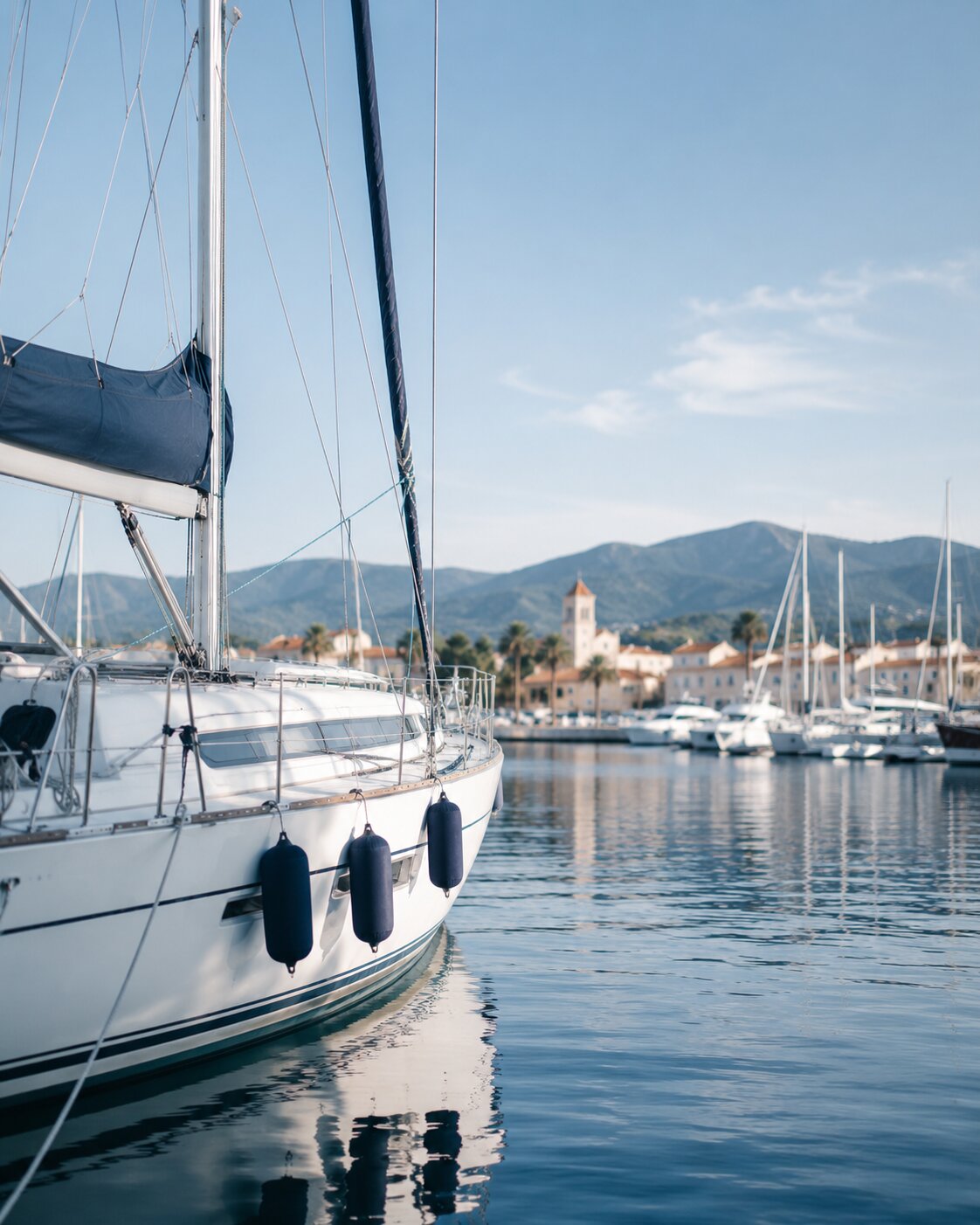
"On the water, fault-based liability applies – without your own policy you may be left covering the damage yourself."
What is boat insurance?
Owning a boat comes with particular responsibility on the water – and a particular financial risk. Boat insurance closes the gaps that neither private liability insurance nor motor vehicle insurance cover. It typically consists of several building blocks that can be combined individually.
Find the right cover nowBoat liability – protection towards third parties
Boat liability insurance is the most important building block of any boat insurance policy. It covers costs for damage you cause to third parties with your boat – other boats, people or property. Specifically covered:
- Personal injury (injuries to fellow sailors, other boaters or bystanders)
- Property damage to other boats, jetties or harbour infrastructure
- Financial loss resulting from personal injury or property damage
- Environmental damage from fuel leaks or similar incidents
- Defence against unjustified claims for damages
Important: unlike with cars, no strict liability applies on the water – only fault-based liability. In other words: if a poorly secured neighbouring boat breaks loose in the harbour and damages yours, its liability insurer does not necessarily pay for your damage, because fault has to be proven. This makes an adequately high cover amount of your own all the more important.
Recommended cover amount: At least 5 million euros. For trips in the Mediterranean (e.g. Italy, Croatia, Greece) we recommend at least 10 million euros, since statutory minimum cover requirements sometimes apply there.
Boat hull cover – protection for your own boat
Boat hull insurance – also called watersport hull insurance – reimburses damage to your own boat. Unlike motor vehicle hull cover, boat hull insurance usually has no strict split between partial and comprehensive cover: most policies offer broad, all-round protection. Typical insured events:
- Collision, grounding, capsizing
- Fire, lightning strike, explosion
- Storm, hail and flood damage
- Theft of the boat or permanently fitted parts (e.g. outboard motor, radio equipment)
- Vandalism damage
- Salvage and wreck removal costs
What to look out for: Insist on all-risk cover with only a few clearly defined exclusions, rather than a list of individually named perils. This avoids surprises in the event of a claim. Just as important is an agreed value clause on a new-for-old basis – more on that in the next section.
Further building blocks: passenger accident, legal protection, trailer
Depending on how you use your boat, it can make sense to add further building blocks to your boat insurance:
Passenger accident insurance
Protects you and your guests on board – including during shore excursions, swimming and watersports. Since boating is not a high-risk sport, premiums are low.
Boat legal protection insurance
Covers legal and court costs if you need to assert your rights against another party involved in an accident or against an insurer.
Trailer insurance
If you transport your boat on a trailer, check whether damage during transport is included – this is not automatically the case with every policy.
Skipper liability
Anyone who skippers boats belonging to others (e.g. at regattas or as a guest skipper) often needs additional protection. Learn more on our skipper liability page.
Boat insurance comparison – what really matters?
A low premium alone is not a mark of quality. When comparing, these four criteria matter most.
Cover amount & liability limit
The cover amount in your liability policy determines the sum up to which your insurer pays for damage you cause to third parties. Personal injury claims on the water in particular can reach enormous sums.
Recommendation: Choose a cover amount of at least 5 million euros. If you plan regular trips to the Mediterranean or to countries with statutory minimum requirements, it should be at least 10 million euros.
All-risk cover vs. named perils
Many cheap policies only cover explicitly named perils – meaning that in the event of a claim, there is regularly a dispute over whether the incident is included in the list.
All-risk cover reverses this principle: everything is insured that is not explicitly excluded – with clearly defined exclusions (e.g. war, intent, normal wear and tear).
Our tip: Invest in a policy with genuine all-risk cover – the higher premium often pays for itself the first time you make a claim.
Agreed value – new value vs. current value
An agreed value clause fixes your boat's insured value in the contract in a binding way. In the event of a total loss, the insurer pays out exactly this amount – with no deduction for depreciation or age.
Beware: not all agreed value clauses are the same. If the agreed value is tied to a current (depreciated) value, the insurer can reduce the payout in the event of a claim. Look explicitly for "an incontestable agreed value on a new-for-old basis" and for clauses such as "new for old" for partial losses.
Cruising area & cover abroad (Blue Card)
The cruising area agreed in your contract determines where your boat insurance applies. Typical tiers: German inland waters, coastal waters (North Sea/Baltic Sea), European inland waters, Mediterranean, Atlantic/worldwide.
The larger the cruising area, the higher the premium. Choose it realistically based on your actual cruising plans – but rather a little more generous than too tight.

The Blue Card: For trips abroad – especially to the Mediterranean – you need the "Blue Card" (International Certificate for Pleasure Craft) as proof of your liability insurance. Make sure your insurer issues this document.
Is boat insurance mandatory in Germany?
No – there is no general statutory obligation in Germany to insure a boat. Neither boat liability nor hull cover is required by law. Even so, there are good reasons not to go without:
Berth & winter storage
Most private harbours, marinas, sailing clubs and winter storage facilities require proof of boat liability insurance before allocating a berth.
Unlimited liability
Without insurance, you are liable with your entire private assets for damage you cause to third parties. Collisions can quickly result in claims running into six figures.
No strict liability
Unlike road traffic, fault-based liability applies on the water – without insurance, this makes it harder for you to enforce your own claims.
Our conclusion: Even though there is no legal requirement – going without boat liability cover is economically hard to justify.
When is boat liability insurance mandatory abroad?
In many European countries, boat liability insurance is required by law. Relevant for your trip planning:
Italy
Mandatory insurance, minimum cover amount set by law (at least EUR 10 million recommended)
Croatia
Mandatory insurance for motorboats and sailing yachts
Greece
Mandatory insurance for boats above certain sizes
France
Mandatory insurance on certain waters
Netherlands / Belgium
Sometimes required for motorboats on inland waters
Check the current rules for your destination cruising area before every trip abroad. The Blue Card is the internationally recognised proof of insurance.
Which boat insurance do I need? – By boat type
Not every boat has the same insurance needs. The boat type, its value and how intensively it is used determine which building blocks make sense.
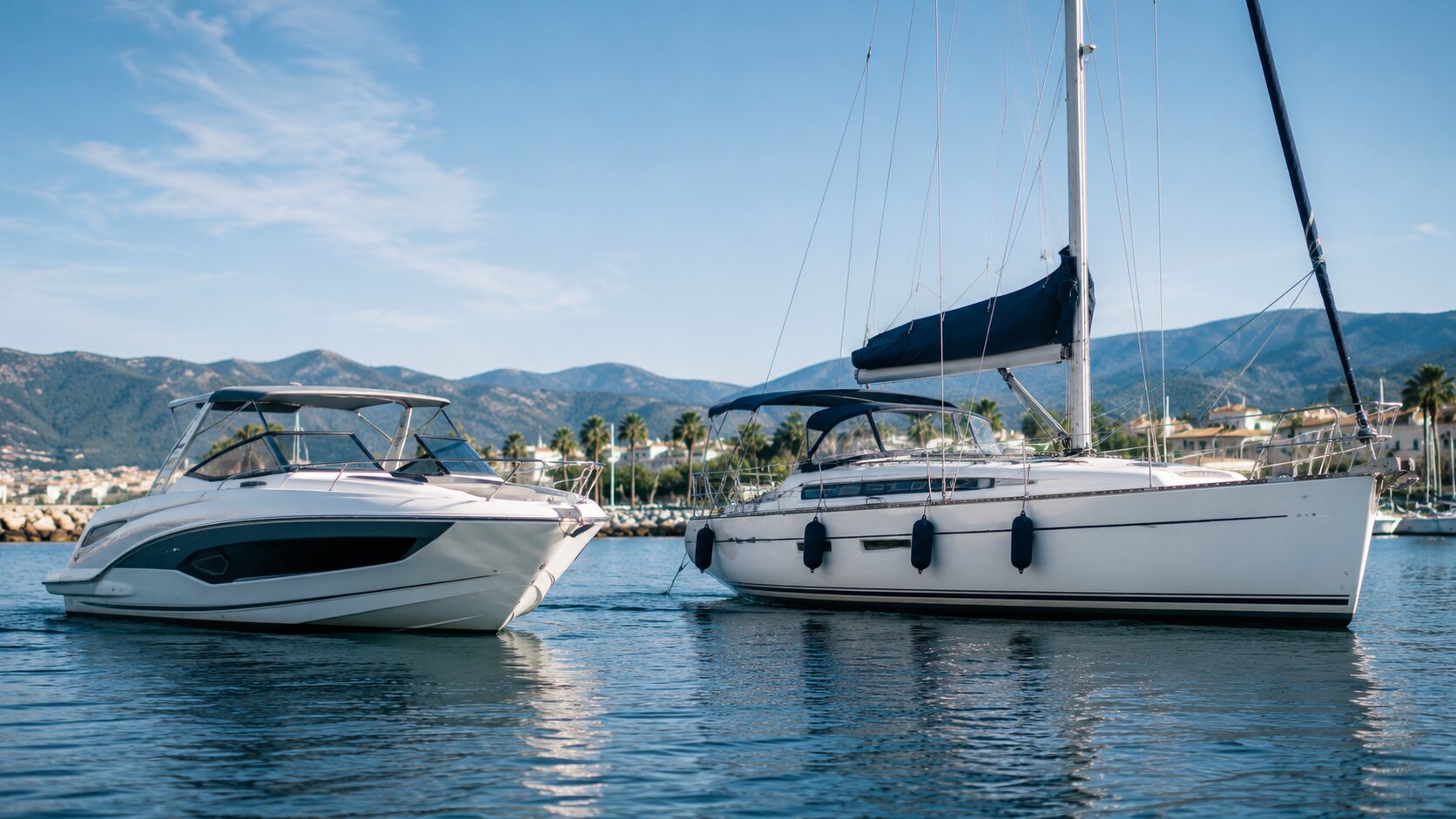
Insuring a motorboat
Motorboats – whether a sport boat, motor yacht or coastal motor yacht – tend to suffer higher damage in a collision due to their power and speed. Recommended cover:
- Boat liability (at least EUR 5 million; Mediterranean: EUR 10 million)
- Comprehensive hull cover with all-risk protection and agreed value
- Check machinery breakdown cover (important for boats up to 15 years old)
- Salvage and wreck removal costs as additional cover
- Trailer insurance if the boat is towed on a trailer
Insuring a sailboat & yacht
For sailboats, the question is often whether liability cover alone is enough or whether hull cover pays off. Rule of thumb: the more valuable and the more frequently used, the more worthwhile hull cover becomes. Particular aspects:
- Mast breakage should be covered by the hull policy
- Racing risk: not automatically included – check for it explicitly
- Blue Card mandatory for trips abroad
- Check crew protection via passenger accident insurance
Insuring small boats, inflatables & dinghies
Muscle-powered boats (rowing boats, kayaks, pedal boats) are often covered under private liability insurance – check your existing policy. For licence-requiring small motorboats, dinghies and motorised inflatables, the following applies:
- A separate boat liability policy is advisable, and often inexpensive through club membership
- Liability-only cover is available for under EUR 50 a year
- Hull cover is optional – for inexpensive boats, the risk can often be carried yourself
Note: if your private liability policy includes motorised watercraft, this usually only means boats not requiring a licence, and only for occasional use.
Boat insurance costs – what will cover cost me?
The annual premium varies widely – from under 50 euros for simple dinghy liability cover to several thousand euros for comprehensive cover on an offshore yacht. These factors are decisive:
These factors affect your premium
- Boat type & engine power: Motorboats with high horsepower cost more than small sailboats
- Boat value (sum insured): A higher new value means a higher hull premium
- Year built: Older boats can be more expensive to insure; many hull calculators fall back to manual quotes for boats over 15 years old
- Cruising area: The Mediterranean and the Atlantic increase the premium compared with purely inland use
- Berth: A secured berth (boat shed, boat hoist) can reduce the premium
- Excess: A higher excess means a lower premium. Choose an excess you can comfortably cover in the event of a claim
- Claims history: Previous claims increase the premium; claim-free years earn discounts
- Licence & experience: Higher qualifications can earn a discount on the hull premium with some insurers
Savings potential: 5 tips for a lower premium
Compare several providers
Premium differences for the same cover can be considerable. Use the NauticAssure calculator above on this page.
Choose your cruising area realistically
A Mediterranean rate for a boat that only ever sails on Lake Constance costs unnecessarily more.
Increase your excess
An excess of 500 instead of 0 euros noticeably lowers the premium without weakening your core cover.
Make use of club memberships
Members of sailing clubs or motoring associations receive special terms with some insurers.
Review your policy every year
If your boat's value has fallen with age, the sum insured should be adjusted to avoid over-insurance.
Ready to compare?
With the NauticAssure calculator, you compare several boat insurance policies in under two minutes – free, independent and with no sign-up required. Enter your boat's details and see instantly which rate suits you best.
Calculate my rate nowFrequently asked questions about boat insurance
Everything important about liability, hull cover and protection abroad.
Chartering instead of using your own boat?
For charterers, charter deposit insurance is the essential product – it protects you from losing your charter deposit if the chartered boat is damaged. Find out more on our overview page.
NauticAssure GmbH
Registered insurance broker under § 34d German Trade Regulation Act (GewO), specialising in watersport and charter insurance. Content is regularly reviewed and updated by our editorial team. Last updated: June 2026.
Your boat. Well protected.
Compare all providers now and sign up online in just a few minutes. Free & no obligation.